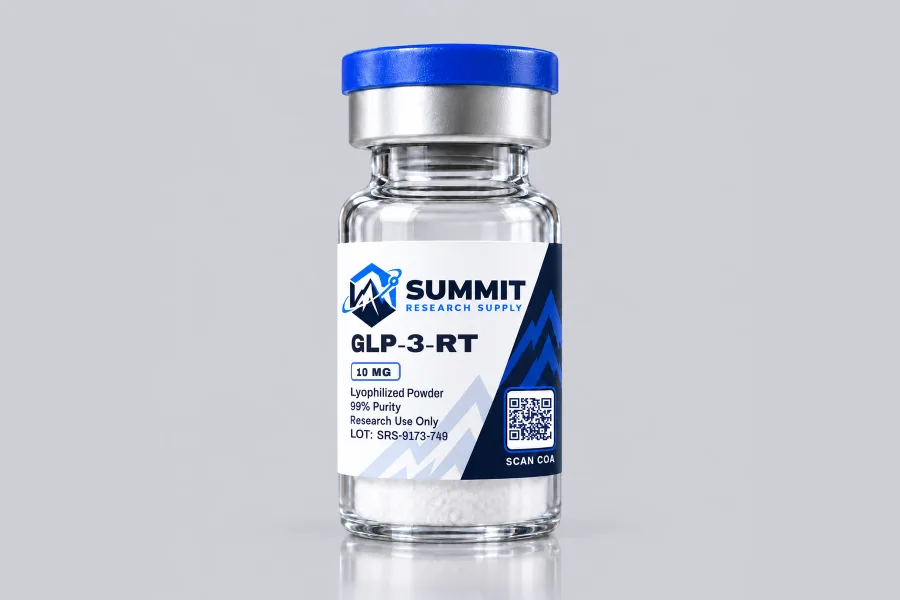
SS-31 (10 mg vial)
Once daily subcutaneous protocol for longevity and cellular health research.
SS-31, known clinically as elamipretide, is a tetrapeptide that concentrates in mitochondria and binds cardiolipin, stabilizing the inner membrane. It has run real clinical trials in mitochondrial disease. The protocol below is once daily subcutaneous.
Quick answer: at the standard 10 mg + 1 mL reconstitution, a 10 mg dose of SS-31 draws 100 units (1.0 mL) on a U-100 insulin syringe, once daily subcutaneous.
Get SS-31 → code PEPDOSE
Protocol overview
Dosing & reconstitution
Frequency: Once daily subcutaneous
Typical duration: 8-12 weeks
Reconstitution: 10 mg vial + 1 mL bacteriostatic water = 10 mg/mL. Units below are for a U-100 insulin syringe at this concentration.
| Phase | Dose | Units per injection |
|---|---|---|
| Weeks 1-2 | 5 mg | 50 units (0.5 mL) |
| Weeks 3-8 | 10 mg | 100 units (1.0 mL) |
Units = (dose ÷ concentration) × 100 on a U-100 syringe. Change the vial size or water volume and the calculator redoes all of this for you.
Track this protocol → Free account · log doses, rotate sites, never lose your history
SS-31 dosing schedule
From the clinical development programme in primary mitochondrial myopathy and related indications. This is one of the better-evidenced compounds in the longevity category — it has run genuine controlled trials, though it has not achieved approval and several trials missed their primary endpoints.
| Phase | Amount | Frequency | Notes |
|---|---|---|---|
| Main trial arm | 40 mg | Once daily, subcutaneous | The amount carried through the later mitochondrial myopathy trials. |
| Earlier dose-ranging | 4, 20, 40 mg | Once daily, subcutaneous | Ascending arms used in the earlier phase of the programme. |
Study length: Trial durations ranged from four weeks to 48 weeks across the programme.
Reconstitution and measurement
This part is arithmetic and does not depend on the evidence level. Concentration is vial size divided by the bacteriostatic water you add. Draw volume is your target amount divided by that concentration. Units are draw volume times 100, because a U-100 syringe reads 100 units per millilitre. Common vials for SS-31: 10, 50 mg.
- Wipe the stoppers of both vials with an alcohol swab and let them dry.
- Draw the bacteriostatic water with a sterile syringe and inject it slowly down the inside wall of the peptide vial — never straight onto the powder.
- Swirl gently until the solution is clear. Do not shake; foaming and agitation damage peptides.
- Label the vial with the date and concentration, and refrigerate at 2–8 °C protected from light.
Worked example at the calculator defaults: 10 mg + 2 mL of bacteriostatic water = 5 mg/mL, so on a U-100 insulin syringe 1 unit = 50 mcg of SS-31. Change either input and the calculator redoes this for you.
Storage and stability
Supplies math
Whatever amounts your research uses, the planning arithmetic is the same. The calculator runs all of this per compound.
Supplies by protocol length
Based on the maintenance dose above (10 mg, once daily subcutaneous) and a 10 mg vial reconstituted with 1 mL.
| Duration | Injections | Vials | Syringes | Bac water | Swabs |
|---|---|---|---|---|---|
| 8 weeks | 56 | 56 x 10 mg | 62 | 6 x 10 mL | 112 |
| 12 weeks | 84 | 84 x 10 mg | 93 | 9 x 10 mL | 168 |
| 16 weeks | 112 | 112 x 10 mg | 124 | 12 x 10 mL | 224 |
Syringe count includes ~10% spares. Swabs = 2 per injection (stopper + site). Vial count assumes the full maintenance dose for the entire duration.
Important notes
Practical considerations for consistency and safety.
- Use a new sterile insulin syringe for each injection and dispose in a proper sharps container.
- Rotate injection sites (abdomen, thighs, upper arms) systematically to reduce local irritation and avoid lipohypertrophy.
- Inject slowly and steadily; wait a few seconds before withdrawing the needle to ensure complete delivery.
- Administer at the same time each day for consistent levels. Setting a daily reminder helps maintain the schedule.
- The 10 mg vial size is standard for this compound. Reconstitute with 1 mL bacteriostatic water for a convenient concentration.
How SS-31 works
A cell-permeable tetrapeptide that concentrates selectively at the inner mitochondrial membrane, where it associates with cardiolipin. Stabilising cardiolipin is proposed to improve cristae structure and electron-transport efficiency.
Benefits & side effects
Potential benefits
- Mitochondrial-targeted antioxidant (elamipretide)
- Reduces oxidative stress at the mitochondrial membrane
- Clinical trials in mitochondrial myopathy
- Supports cellular energy production
Possible side effects
- Injection site reactions
- Generally well tolerated in clinical trials
- Some patients reported headache
- Ongoing clinical studies will inform safety
This list reflects published literature and community reports. Individual responses vary. Not medical advice.
Bloodwork worth tracking
The community-standard practice is a baseline panel before starting, a recheck 8 to 12 weeks in, and another after time off. For SS-31, the markers most worth watching:
CMPCBClactate
Typical time off: 4-8 wks
Lab panels are how a research protocol stays honest: numbers move before symptoms do. Interpretation belongs with a clinician. Not medical advice.
Lifestyle factors
None of the literature above was run on a background of poor sleep and no protein. These variables move outcomes more reliably than any compound on this site.
- Protein in the 1.6 to 2.2 g/kg range preserves lean mass through any body-composition phase.
- Resistance training 2 to 4 days per week plus 150+ minutes of weekly aerobic work reinforces whatever the protocol is doing.
- Sleep is the recovery window: 7 to 9 hours at consistent times.
- Hydration matters more than usual on compounds with GI or flushing effects: 2 to 3 liters daily.
- Track the variables that matter: weigh-ins, measurements, photos, and labs at sensible intervals.
Subcutaneous technique and practical notes
General best practice from clinical injection guidance — the same fundamentals nurses are taught, none of it specific to any compound.
Quick answers
How many syringe units is a 10 mg dose of SS-31?
At the standard reconstitution of 10 mg with 1 mL bacteriostatic water (10 mg/mL), a 10 mg dose draws 100 units (1.0 mL) on a U-100 insulin syringe.
How do you reconstitute SS-31?
Add 1 mL of bacteriostatic water to the 10 mg vial for 10 mg/mL. Inject the water slowly down the inside wall of the vial, swirl gently without shaking, and refrigerate at 2 to 8 °C after mixing.
How long does a 10 mg vial of SS-31 last?
About 1 maintenance doses of 10 mg, roughly 0.1 weeks at once daily subcutaneous.
Does SS-31 have human trial data?
Yes. The dosing on this page is anchored to published human research (Elamipretide clinical programme (MMPOWER series in primary mitochondrial myopathy)).
How does SS-31 work?
A cell-permeable tetrapeptide that concentrates selectively at the inner mitochondrial membrane, where it associates with cardiolipin. Stabilising cardiolipin is proposed to improve cristae structure and electron-transport efficiency.
Sourcing SS-31
Whatever you are working with, the documentation matters more than the price. Ask for a batch certificate of analysis whose lot number matches the vial you actually receive — a COA for a different batch tells you nothing about yours.
SS-31 at Summit Research Supply → Grade a COA first
Summit is the supplier we feature and an affiliate link. Our COA checklist applies the same way to any vendor.