
GLP-1 research compounds
The GLP-class is the most active area in current peptide research and the most confusing to measure — three compounds, very different vial sizes, and amounts small enough that dilution choice changes everything about how a draw reads. This hub compares them by mechanism and links each to its reconstitution math.
The three compounds at a glance
| Compound | Mechanism | Common research vials | Math |
|---|---|---|---|
| Retatrutide | GLP-1 / GIP / glucagon triple agonist | 5, 10, 15, 20, 30 mg | Calculator → |
| Tirzepatide | GLP-1 / GIP dual agonist | 10, 15, 20, 30, 60 mg | Calculator → |
| Semaglutide | GLP-1 receptor agonist | 2, 5, 10 mg | Calculator → |
Compound by compound
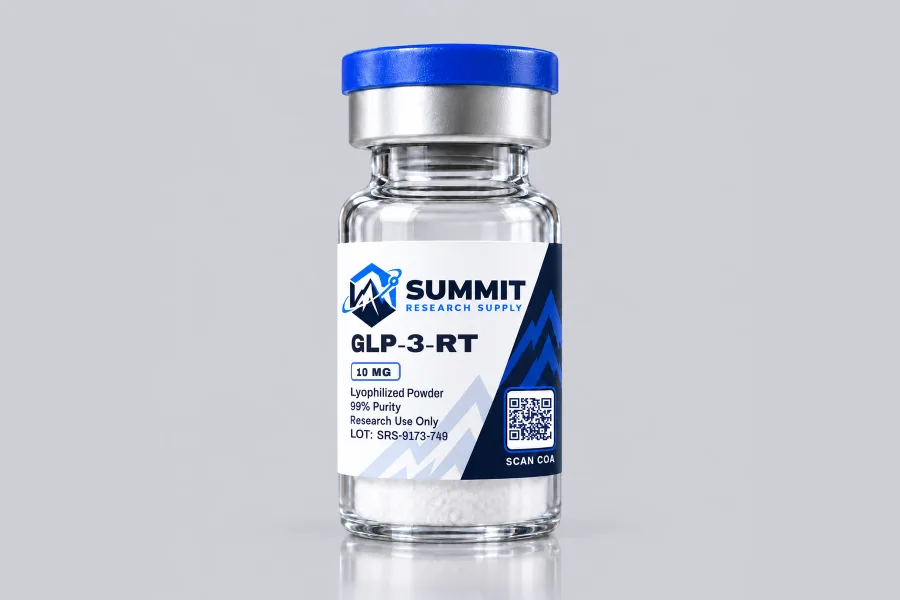
Retatrutide
The newest of the three and the only triple agonist, still investigational. Handled in small milligram amounts and stepped up over weeks in published research.
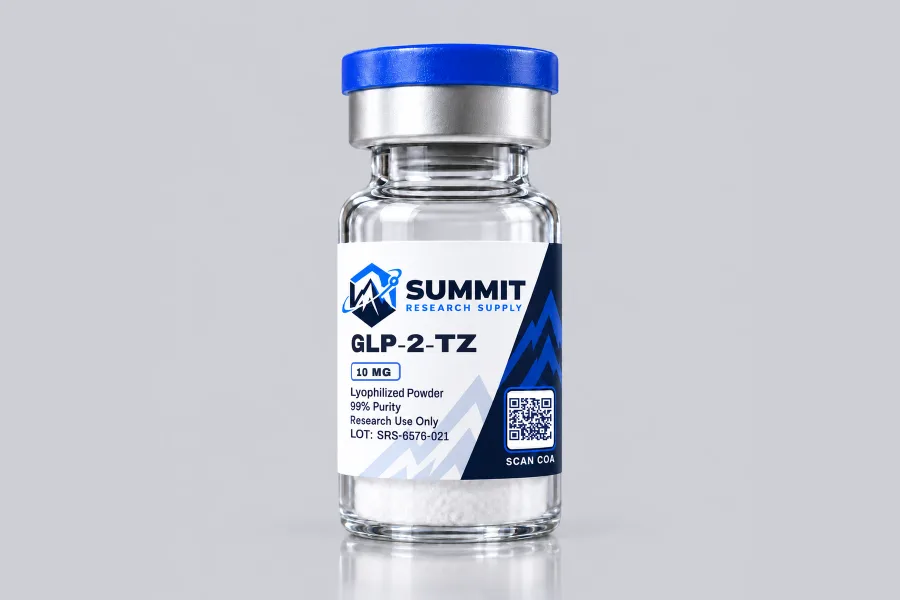
Tirzepatide
Research setups commonly target 10 mg/mL or 20 mg/mL, which keeps most draws on readable unit marks.
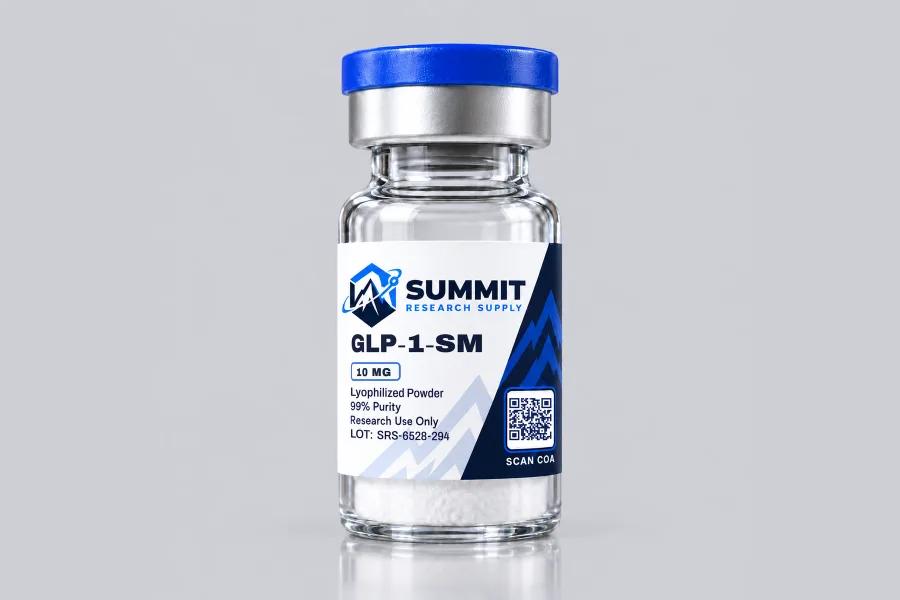
Semaglutide
Amounts are small — fractions of a milligram — so dilution choice matters more here than for the others. A finer syringe helps.
Titration: converting published steps to units
Research on this class steps amounts up gradually rather than starting at a target, which means the syringe reading changes at every step while the vial stays the same. Working that out by hand for each phase is where errors creep in.
The GLP-1 titration calculator takes a published escalation schedule and converts every step into the exact draw for your vial and water volume. It is a unit-conversion reference, not a prescription or a schedule anyone should follow.
Why GLP-1 draws are so small — and what to do about it
These compounds are handled in small amounts relative to their vial sizes, so at a high concentration a target can land on just a few syringe units. At that size, a small reading error becomes a large percentage error.
The fix is dilution, not a different syringe technique. Reconstituting with more bacteriostatic water lowers the concentration, so the same amount spreads across more units and becomes far easier to read. Our concentration guide works through the arithmetic, and U-100 units explained covers why 100 units equals 1 mL.
GLP-1 research FAQ
What is the difference between Semaglutide, Tirzepatide and Retatrutide?
They differ by how many receptor pathways they act on. Semaglutide is a single GLP-1 receptor agonist. Tirzepatide is a dual GLP-1 and GIP agonist. Retatrutide is a triple agonist adding glucagon receptor activity. More pathways does not automatically mean interchangeable handling — the amounts and vial sizes differ substantially.
How do I reconstitute a GLP-1 research vial?
The arithmetic is the same as any lyophilised peptide: concentration equals the vial amount divided by the bacteriostatic water you add, draw volume equals your target amount divided by that concentration, and units equal the draw volume times 100 on a U-100 syringe. Each compound has its own calculator with reference tables.
What does titration mean in this context?
Published research on this compound class steps the amount up gradually over weeks rather than starting at a target. The GLP-1 titration calculator converts those published escalation steps into syringe units for your specific vial — as a unit-conversion reference, not a recommendation.
Why are my GLP-1 draws so small?
Because these compounds are handled in small amounts relative to typical vial sizes. If a draw is only a few units, reconstitute with more bacteriostatic water — the same amount then spreads across more units and is far easier to read accurately.
Are these approved medications?
The research-grade compounds referenced here are sold as research chemicals for laboratory use only and are not approved medicines. They are not for human or veterinary use, and nothing on this page is medical advice or a recommendation to use anything.